Which cancer types can be detected?
HPH MRD detects circulating tumor DNA (ctDNA) from a peripheral venous blood draw and is not specific to any cancer type. The test can be applied to almost every solid tumor cancer, as long as it sheds DNA into the bloodstream. The concept of ctDNA detection has been shown for many cancer types, such as colorectal, lung, breast, esophageal, melanoma, pancreatic, bladder cancer and other cancer types.
When to use HPH MRD?
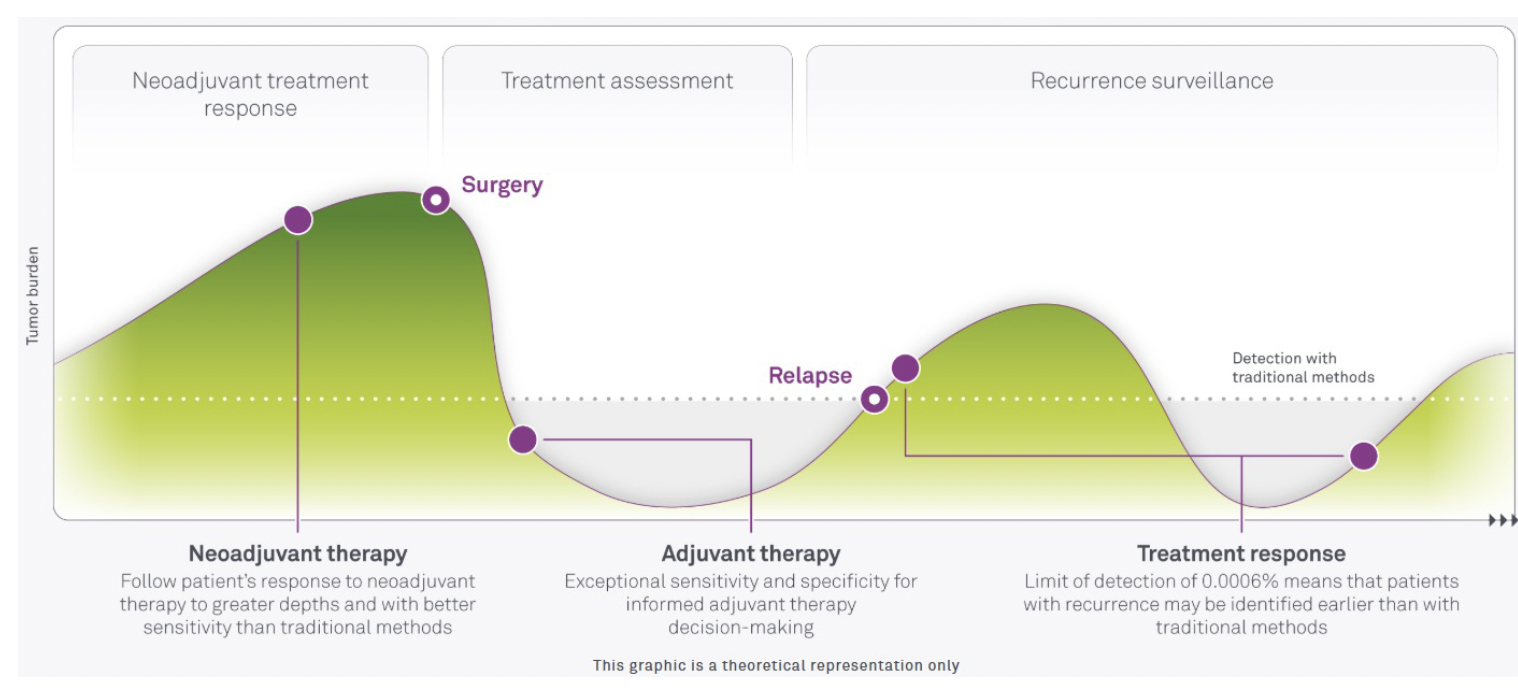
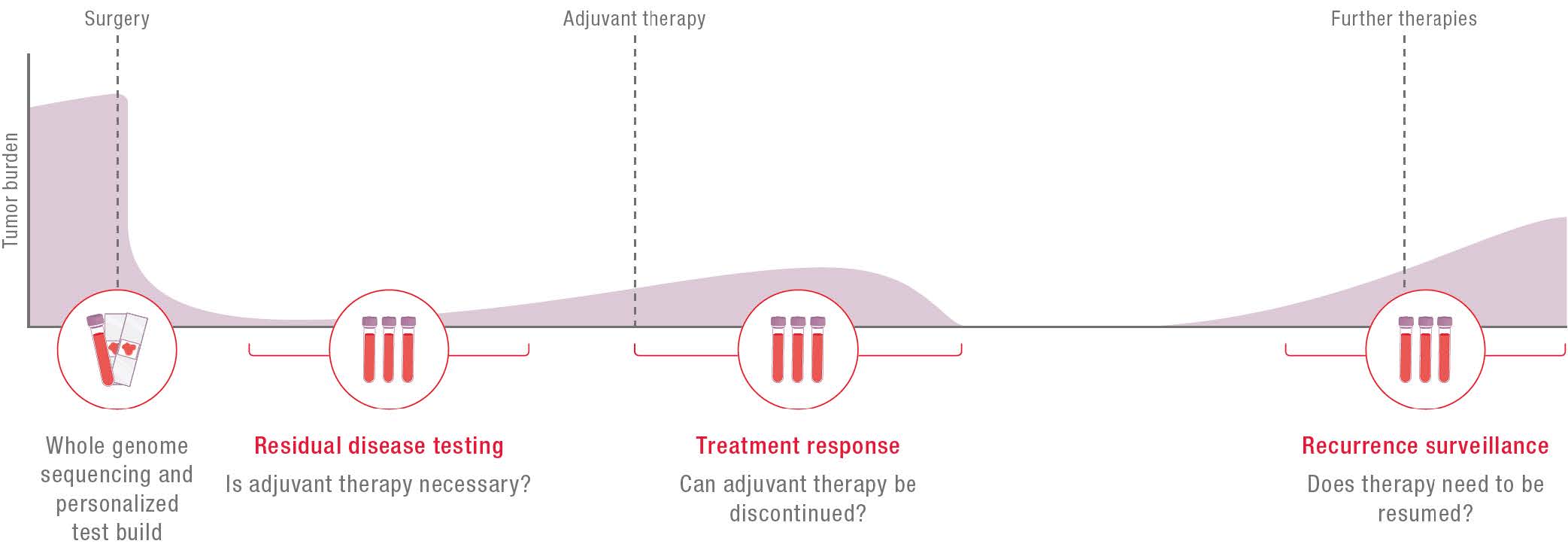
ctDNA is a powerful biomarker and can be measured to assess the effectiveness of treatment at multiple time points in a patient's journey.
What does ultra-high sensitivity mean?
Circulating tumor DNA (ctDNA) is extracted from a blood draw that contains cell-free DNA next to many other biological molecules. The main component of cell-free DNA is normal or healthy DNA and only a fraction within this DNA stems from the tumor. HPH MRD can identify miniscule amounts of tumor DNA in a background of normal DNA and is thus ultra-sensitive. The limit of detection has been determined to be below 1 ppm (parts-per million), which means that HPH MRD can identify one tumor molecule in one million normal DNA molecules. This low limit of detection means an ultra-high sensitivity to detect the smallest number of tumor cells in your body.
How does HPH MRD work?
HPH MRD starts with manufacturing of a personalized test based on the genetic fingerprint of your tumor. To retrieve the genetic fingerprint, we need a small amount of tumor tissue either from the resected tumor or from a biopsy and a blood sample in a specialized test tube (Streck tube). We will analyze the DNA of both samples and identify the genetic alterations that are specific for your tumor and design a test that can measure these genetic alterations. This results in the HPH MRD Baseline report. Follow up testing requires only a blood sample which will be analyzed using the personalized test. The results will be available in the HPH MRD Monitoring report.